A Friendly & Professional Truck and Camper Embroidery Design Review
When you're sourcing embroidery files for your business merchandise, a design needs to be more than just pretty. It needs to be practical, versatile, and resonate with your brand's identity. Let's take a close look at the Truck and Camper Redwork Design from the perspective of an embroidery designer who handles branded patches, uniforms, and merch daily.
First Impressions: Rustic Charm with Business-Friendly Versatility
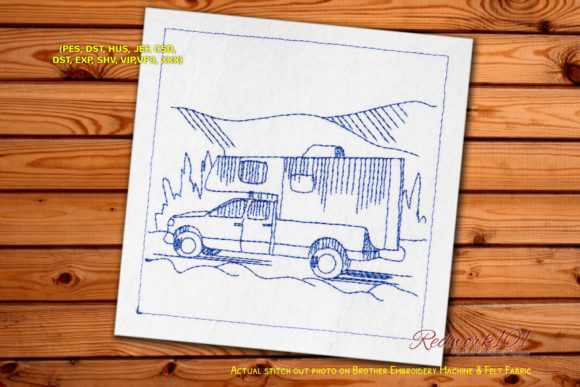
This design immediately strikes a balance. The "redwork" style suggests a classic, handmade aesthetic, while the clear truck and camper motif communicates a specific, relatable theme—perfectly fitting a Transportation category product. The design feels friendly, approachable, and a bit rustic. It doesn't scream overly corporate, which is ideal for many small businesses, Etsy sellers, and crafters looking for that authentic, personal touch on their products.
The note about the optional box stitch is a practical detail from a designer's perspective. Knowing that an outer border can be a separate color element means you have flexibility. You can match it to your brand colors or omit it entirely for a cleaner look, adapting the embroidery file to fit different applications without altering the core artwork.
Real-World Business Applications: Where This Design Excels
For a café with a travel theme, a boutique selling handmade goods, or a local business with a "journey" brand story, this design offers multiple avenues for small business merch.
Perfect for Branded Patches and Product Labels
An embroidered patch using the Truck and Camper Redwork Design could be a standout item. It would work beautifully as a sew-on patch for tote bags, a product label for handmade items, or even a collectible pin for customer gifts. The contained, illustrative nature of the design makes it a natural candidate for a patch format.
Strong Performance on Apparel and Accessories
Consider this for custom apparel like staff polos, apron embroidery for a bakery or café, or a subtle sleeve detail on work shirts. For cap embroidery, the design's likely balanced composition is promising, provided it can be scaled appropriately for the curved front of a cap. As a central motif on a tote bag design, it would create a charming, conversation-starting piece of merchandise.
Enhancing Brand Identity and Customer Engagement
Using a consistent, well-executed embroidery design like this on multiple touchpoints—uniforms, merchandise, packaging accents—builds brand identity. It creates visual consistency and tells a cohesive story. For a customer, a beautifully embroidered logo or accent on a product adds perceived value and craftsmanship, boosting trust and professionalism.
Designer's Notes: Practical Considerations for Production
Before running this digital embroidery file on your first batch of merch, here are critical steps every professional takes.
Testing is Non-Negotiable
- Test in Black and White First: Sew out a sample on your actual fabric using just black thread. This reveals the true structure, stitch density, and any potential issues with small details without the distraction of color.
- Check Small Patch Size Performance: If you intend to make small patches or use it on caps, scale it down and test it. Ensure the truck and camper details remain clear and don't get lost in high stitch density.
- Review Thread Color Contrast: The "redwork" implies a primary color, but test your chosen thread palette against your background fabric—especially on dark uniforms or textured materials.
- Test on Real Fabric with Proper Stabilizer: Never judge by a screen image. Hoop your actual fabric texture—whether it's denim for a tote, twill for a cap, or poly-cotton for a uniform—using the correct stabilizer and run the file.
Pre-Production Checklist for Businesses
- Create a Printable Mockup: Before client or internal approval, place the design on a mockup of your intended product (shirt, bag, apron). This helps visualize the final finished product.
- Compare Beside Other Design Assets: Does the Truck and Camper Redwork Design harmonize with your existing logo, typography, and brand colors? Place them together on a virtual canvas.
- Confirm Commercial Licensing: This is paramount. Before any commercial embroidery project, verify the license terms of the embroidery file allows for business use, resale on products, and production at scale.
- Confirm Hoop Size Requirements: The product description doesn't specify an exact hoop size. You must check the file's details to know the minimum hoop required for a clean sew-out, ensuring your machine and process can handle it.
Where to Use This Design Carefully
While versatile, some applications demand extra attention.
On very small patch sizes, the interior details of the truck and camper could become muddled if the design isn't optimized for scaling. On cap embroidery, the curved surface can distort flat designs; a test sew on a cap is essential. If the design incorporates tiny lettering (not mentioned in the description, but always a consideration), those elements might not survive scaling down or sewing on textured fabrics.
For items that will undergo frequent washing like staff uniforms, a robust stitch structure is key. Your test sew-out will show if the design has areas of high stitch concentration that could wear faster or cause fabric puckering.
Final Verdict for Small Business Merchandise
The Truck and Camper Redwork Design presents a strong opportunity for businesses seeking a warm, illustrative brand accent. Its thematic clarity and stylistic charm can enhance a handmade product line or add a personalized touch to business apparel. Success hinges on treating it as a professional design asset: thoroughly testing its technical performance on your specific materials and applications, and ensuring its use aligns with your broader brand identity and commercial goals. When executed well, this design can turn a simple tote, apron, or patch into a meaningful piece of branded merchandise that customers notice and value.